

How Travel Agencies Use GDS for Flight & Hotel Booking
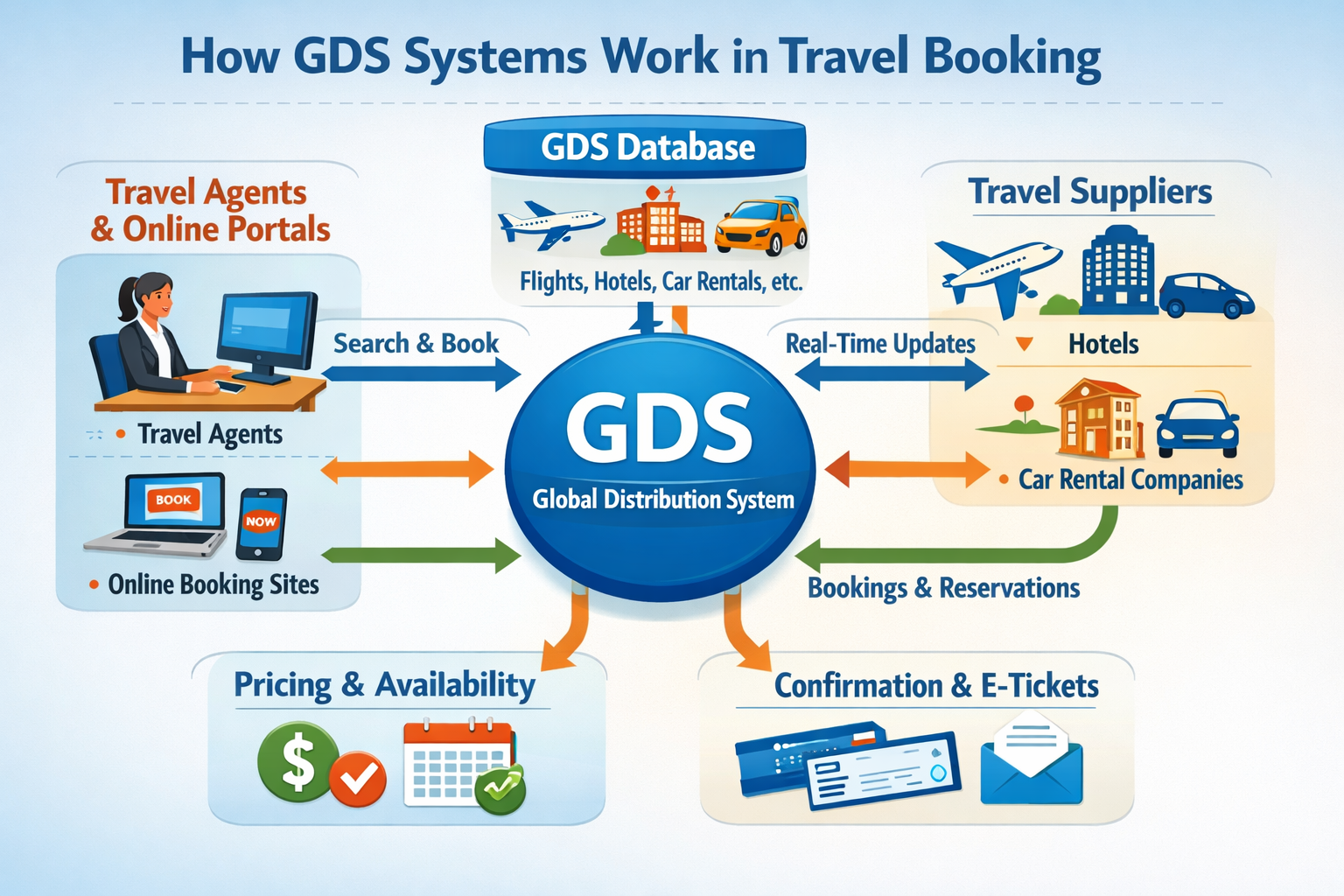
Travel agencies rely on powerful technology to deliver rapid, accurate, and convenient booking experiences. One of the most important tools behind the scenes is the Global Distribution System (GDS). It connects agencies with airlines, hotels, and other travel providers in real time, making it easier to search, compare, and book travel services.
In this article, you’ll learn how travel agencies use GDS for flight and hotel booking and why it plays a key role in the modern travel industry.
What Is a GDS and Why It Matters
A global distribution system (GDS) is a centralized platform that allows travel agents to access travel inventory, such as flights, hotel rooms, and car rentals. Instead of checking multiple airline or hotel websites, agents can use a single system to view all available options.
This matters because it saves time, improves accuracy, and allows agencies to provide better service to their clients through reliable GDS integration services. It also ensures that pricing and availability are always up to date.
What Is GDS for Flight Booking?
A global distribution system is a platform that connects travel agencies with airline databases. It provides real-time access to flight schedules, seat availability, and pricing.
Instead of visiting individual airline websites, agents can view all flight options in one system, which makes the booking process quicker and more efficient.
How Travel Agencies Use GDS for flight booking.
Travel agencies handle hundreds of flight searches and bookings every day. To make this process fast and accurate, they rely on a global distribution system (GDS). It allows them to access multiple airlines, compare options, and complete bookings from one place.
Searching for Flights in Real Time
Travel agents use GDS to search for flights based on customer preferences, such as destination, travel dates, budget, and airline choice. The system instantly displays available flights from multiple airlines.
This allows agents to quickly compare the following:
Prices across airlines
Flight durations and layovers
Seat availability
Instead of switching between different airline platforms, everything is visible in one place with a Flight API integration.
Comparing and Selecting the Best Option
Once the results are displayed, agents help customers choose the best flight based on their needs. For example, some travelers prefer the lowest price, while others may prioritize a shorter journey or fewer stops.
The GDS makes it easy to filter and sort options so agents can recommend the most suitable choice.
Booking and Ticketing
After selecting a flight, the agent can book it directly through the GDS. The system generates a Passenger Name Record (PNR), which stores all booking details.
The agent can issue the ticket, confirm the booking, and share the itinerary with the customer, all on the same platform.
Managing Changes and Cancellations
Travel plans often change, and GDS allows agents to modify bookings without hassle. They can:
Change travel dates
Upgrade seats
Cancel or rebook flights
This flexibility helps agencies provide reliable customer support even after the booking is complete.
What Is GDS in Hotel Booking?
A global distribution system is a centralized platform that allows travel agents to search for and book hotel rooms from multiple suppliers in one place. It removes the need to check individual hotel websites and ensures that agents always have the latest information.
Travel agencies need to find the right hotel quickly while keeping the customer’s preferences in mind. To make this process smooth and reliable, they use a global distribution system (GDS). It connects them to thousands of hotels worldwide and provides real-time access to availability, pricing, and room details, highlighting the benefits of GDS for travel businesses.
How Travel Agencies Use GDS for Hotel Booking
GDS is equally valuable when it comes to booking hotels. It provides access to a wide range of properties worldwide, clearly showing how GDS works in the hotel industry by connecting travel businesses with real-time inventory and pricing.
Searching for Hotels
The process starts when a travel agent enters basic details such as destination, check-in and check-out dates, number of guests, and room preferences.
The GDS then displays a list of available hotels that match the search criteria. This includes options from budget stays to luxury properties.
Comparing Hotel Options
Once the results appear, agents compare hotels based on what the customer is looking for. They review important details like the following:
Room rates
Hotel location
Star rating
Amenities (Wi-Fi, breakfast, parking, etc.)
Guest reviews (if available)
This helps agents recommend the most suitable hotel for the traveler.
Checking Room Availability and Policies
After selecting a hotel, the agent checks room availability in real time. They also review booking policies such as the following:
Cancellation rules
Refund conditions
Check-in and check-out timings
This step ensures there are no surprises for the customer later.
Making the Reservation
Once everything is confirmed, the agent books the room through the GDS. The system reserves the selected room and confirms the booking instantly. This reduces the chances of errors or overbooking.
Sending Booking Confirmation
After the reservation is complete, the agent shares the booking details with the customer. This usually includes the hotel name, address, booking dates, and confirmation number.
Customers receive clear and immediate confirmation, which builds trust.
Managing Changes and Cancellations
If the customer needs to change or cancel the booking, the agent can do it directly through the GDS. They can update dates, modify room types, or cancel the reservation based on the hotel’s policy. This makes post-booking management easy and efficient, especially when combined with hotel API integration for seamless updates and real-time synchronisation.
Benefits of Using GDS for Travel Agencies
Global Distribution Systems (GDS) have become an essential tool for modern travel agencies. They help agencies manage bookings, access travel inventory, and deliver better service to customers all from a single platform.
Below are the key benefits of using GDS for travel agencies.
Faster and More Efficient Booking Process
One of the biggest advantages of GDS is speed. Travel agents can search, compare, and book flights or hotels within minutes.
Instead of switching between multiple airline or hotel websites, everything is available in one system. This reduces manual work and helps agents serve more customers in less time.
Real-Time Availability and Pricing
GDS provides live updates on pricing and availability. This ensures that agents always work with accurate information.
Real-time data helps avoid issues like overbooking or incorrect pricing, which improves trust and reliability.
Improved Customer Experience
With quick access to information and faster booking, travel agencies can deliver a smoother experience.
Agents can also personalize recommendations based on customer needs, such as preferred airlines, hotel locations, or travel dates. This level of service helps build long-term customer relationships.
Easy Booking Management
GDS makes it simple to manage bookings even after they are confirmed. Travel agents can:
Modify travel dates
Cancel or rebook services
Upgrade seats or rooms
This flexibility allows agencies to handle customer requests efficiently and provide strong after-sales support.
Increased Revenue Opportunities
By using GDS, travel agencies can access additional services like car rentals, travel insurance, and holiday packages.
This creates opportunities for upselling and cross-selling, which can increase overall revenue for the business.
Centralized System for Better Control
A GDS acts as a single platform where all bookings and customer details are stored. This makes it easier for agencies to track transactions, manage data, and maintain organized records.
Having everything in one place also improves workflow and reduces the chances of errors.
Challenges Travel Agencies May Face
While Global Distribution Systems (GDS) provide significant advantages, travel agencies may encounter several operational and technical challenges when using them. Being aware of these challenges helps agencies prepare better and use the system more efficiently.
Common Challenges:
Learning curve for new users
High setup and operational costs
Dependency on the system
Limited customization
Complex interface
Competition with online booking platforms
Data management challenges
Keeping up with industry changes
Integration issues with other systems
Training and staff skill requirements
Conclusion
Global Distribution Systems play a crucial role in how travel agencies operate. From searching flights to booking hotels and managing changes, GDS simplifies the entire process.
For tourists, this means faster service, better options, and a smoother experience. For agencies, it means improved efficiency and the ability to deliver high-quality service every time.
If you’re building or running a travel business, understanding how GDS works is essential to staying ahead in the industry.


Write a comment ...