
Building a mobile app today usually means thinking beyond a single platform. Most businesses want their app available on both iOS and Android from day one, without doubling development time or cost. That’s where cross-platform mobile app development comes in.
However, once you decide to go cross-platform, a new challenge appears. There are multiple frameworks, multiple opinions, and plenty of conflicting advice online. Some say one framework is clearly better, others argue it depends entirely on the use case. This often leaves founders, product managers, and even technical teams unsure about the right direction.
This article takes a practical, user-focused approach to the question: which is the best choice for cross-platform mobile apps? Instead of pushing a single answer, it explains how to evaluate options based on real-world needs, trade-offs, and long-term impact.
Understanding Cross-Platform Mobile App Development
Cross-platform mobile app development allows businesses to build a single application that runs on both iOS and Android. Instead of maintaining two separate codebases, teams work with one shared foundation.
This approach exists to solve a common problem:
Native apps offer performance and control, but require double the effort
Businesses want speed, efficiency, and consistent experiences across platforms
Cross-platform frameworks aim to balance these needs by reducing duplication while maintaining acceptable performance.
What Does “Best” Actually Mean in Cross-Platform Apps?
Before comparing frameworks, it’s important to define what “best” means in practical terms.
For some teams, the best choice means:
Faster time to market
Lower upfront development effort
For others, it means:
Long-term scalability
Easier maintenance
Strong performance under heavy usage
A framework that works well for a startup MVP may not suit a large-scale consumer app with millions of users. The “best” choice is always relative to product goals, constraints, and plans.
Why Businesses Choose Cross-Platform Over Native Development
Cross-platform development has grown steadily because it solves real-world business problems.
Faster development cycles
With one shared codebase, features are built once and deployed to multiple platforms. This reduces development time and speeds up launches.
Reduced resource requirements
Instead of hiring and managing separate iOS and Android teams, companies can work with a single cross-platform team, simplifying coordination.
Consistent user experience
A shared UI layer makes it easier to maintain design consistency across platforms, especially for brand-driven products.
Easier updates and maintenance
Bug fixes and enhancements can often be released simultaneously, reducing long-term maintenance complexity.
Key Factors to Evaluate Before Choosing a Cross-Platform Solution
Choosing the right cross-platform option requires looking beyond popularity or trends. Several practical factors should guide the decision.
App complexity and functionality
Simple apps with standard navigation and workflows adapt well to cross-platform frameworks. Apps requiring advanced animations, real-time processing, or heavy hardware integration may face limitations.
Performance expectations
Most modern cross-platform frameworks deliver near-native performance for common use cases. However, apps that are performance-critical should be evaluated carefully.
Time-to-market pressure
If speed is essential, cross-platform development often enables faster validation and iteration.
Scalability and long-term roadmap
Early decisions influence how easily an app can evolve. Frameworks differ in how well they support large-scale feature growth.
Budget considerations
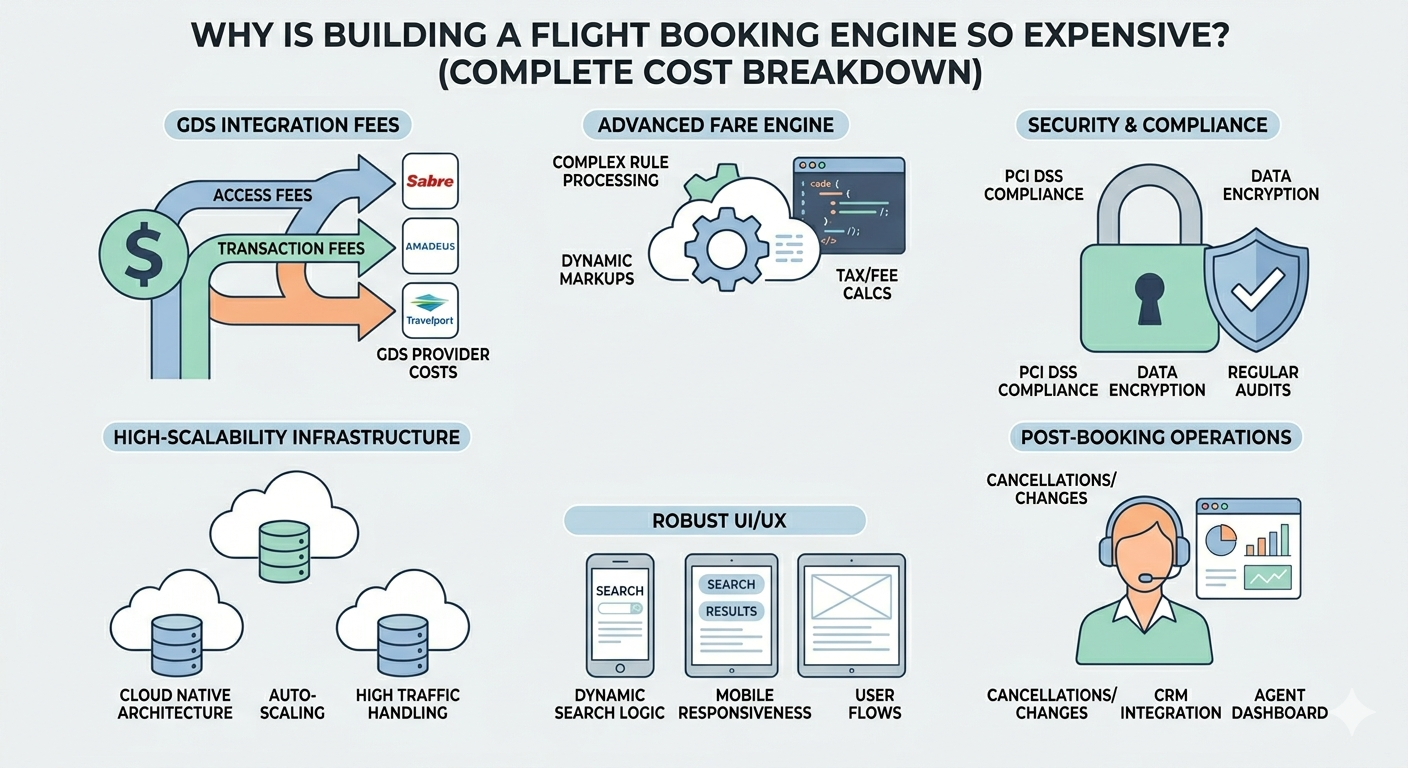
Framework choice directly affects development time, maintenance effort, and team structure—all of which shape overall Mobile app development cost. Understanding how these elements come together is critical for long-term planning:
Overview of Popular Cross-Platform Frameworks
Several frameworks dominate the cross-platform ecosystem today. While many tools exist, most serious projects focus on a small set of proven options.
Flutter
Flutter provides a unified UI system and is known for smooth animations and visual consistency. It compiles to native code and offers strong control over design.
Strengths
High UI consistency across platforms
Good performance for most use cases
Strong support for custom designs
Limitations
Smaller developer pool compared to older frameworks
Learning curve for teams unfamiliar with its ecosystem
React Native
React Native relies on native components and has broad adoption, especially among startups and fast-moving teams.
Strengths
Large community and ecosystem
Easier onboarding for JavaScript-based teams
Strong third-party library support
Limitations
Performance tuning may be required for complex apps
UI consistency can vary across platforms
Other cross-platform options
Other tools exist, but are often used for niche or simpler applications. Most businesses prioritize frameworks with strong community support and long-term stability.
Flutter vs React Native: A Practical Comparison
This comparison comes up frequently because both frameworks are widely adopted and capable.
Performance and user experience
Both can deliver smooth experiences for typical apps. Flutter offers more predictable UI behavior, while React Native relies on native components for rendering.
Development speed
React Native may feel faster for teams already familiar with JavaScript. Flutter’s tooling can speed up UI development once teams are comfortable with it.
Ecosystem and longevity
React Native benefits from a mature ecosystem, while Flutter continues to grow rapidly and is increasingly adopted for long-term projects.
Cost implications
There is no automatic cost advantage to either framework. Cost differences usually stem from:
Team familiarity
App complexity
Maintenance needs
Choosing the Best Cross-Platform Framework by Use Case (Core Section)
There is no single framework that is universally “best” for all cross-platform mobile apps. The best choice depends on what you are building, who you are building it for, and how the product is expected to evolve.
Instead of comparing frameworks in isolation, it is far more useful to evaluate them based on real-world use cases. Below is a practical breakdown of which cross-platform approach works best in common scenarios.
Best Choice for Startups and MVPs
For startups, the primary goals are usually speed, flexibility, and cost control. Early-stage products need to validate ideas quickly, iterate often, and avoid heavy upfront investment.
What matters most for startups
Fast development and launch
Easy hiring and onboarding of developers
Ability to pivot without rewriting the app
Lower initial development and maintenance effort
Why React Native often fits this use case
Large global developer pool makes hiring easier and faster
Familiar JavaScript-based ecosystem reduces onboarding time
Strong third-party library support speeds up feature development
React Native is frequently chosen for MVPs because it allows teams to move quickly without committing to complex architecture too early. While performance tuning may be needed later, this trade-off is acceptable for early validation.
When Flutter may also work
Flutter can also be a good choice for startups if:
The product relies heavily on custom UI
Visual consistency is a core part of the brand
The team is comfortable investing in a slightly steeper learning curve
For many startups, the deciding factor is not technical superiority but time-to-market and team availability.
Best Choice for Enterprise and Long-Term Products
Enterprise applications have very different requirements from MVPs. These products are expected to scale, remain stable for years, and support ongoing feature expansion.
What matters most for enterprise apps
Long-term maintainability
Consistent UI across platforms
Predictable performance at scale
Clear architecture and code organization
Why Flutter is increasingly favored
Flutter’s architecture allows teams to maintain a single, well-structured codebase with strong control over UI behavior. This becomes valuable as applications grow in size and complexity.
Key advantages for enterprise use cases:
Consistent user experience across devices
Easier enforcement of design systems
Strong performance for complex interfaces
Reduced fragmentation across platforms
For enterprises, the slightly higher upfront learning curve is often outweighed by long-term stability and maintainability.
Best Choice for Feature-Rich and Consumer-Facing Apps
Consumer apps often prioritize design, interaction, and responsiveness. These apps compete heavily on user experience and must feel polished from day one.
What matters most for consumer apps
Smooth animations and transitions
High responsiveness
Visually rich interfaces
Frequent feature updates
Framework considerations
Flutter excels when UI customization and animation quality are priorities
React Native performs well for standard interfaces but may require additional optimization for complex UI interactions
For apps where visual differentiation is a competitive advantage, Flutter often provides more flexibility without relying heavily on platform-specific workarounds.
Best Choice When Performance Is a Critical Concern
Performance-sensitive apps require careful evaluation before choosing any cross-platform solution.
Examples of performance-critical apps
High-end games
Advanced AR/VR experiences
Apps with heavy real-time processing
Deep hardware-level integrations
In these cases:
Cross-platform frameworks may still work, but with limitations
Native development often offers better control and optimization
Cross-platform development is best suited for applications where business logic, content delivery, and standard interactions dominate.
Best Choice When Budget and Cost Control Are the Priority
Cost is one of the most common reasons teams choose cross-platform development, but the framework choice still matters.
How framework choice impacts cost
Development speed affects initial investment
Maintenance effort affects long-term spending
Team availability influences hourly rates
A framework that shortens development time but increases future maintenance can end up costing more overall. Conversely, a framework with a slightly higher upfront investment may reduce long-term costs through stability and easier updates.
This is why framework decisions should always be evaluated in the context of total lifecycle cost, not just launch expenses.
The Most Important Insight: “Best” Is Context-Driven
The most important takeaway is simple:
There is no best cross-platform framework in isolation
There is a best framework for a specific product context
The right choice aligns:
Technical capabilities
Business goals
Team expertise
Long-term roadmap
Teams that evaluate frameworks based on use case—not hype—make more resilient decisions and avoid costly rewrites later.
Is Cross-Platform Always the Right Choice?
Despite its advantages, cross-platform development isn’t ideal for every app.
When native development may be better
Apps requiring deep hardware integration
Performance-intensive applications such as high-end games
Products with platform-specific UX requirements
In these cases, native development may provide more control and optimization.
How to Make the Right Cross-Platform Decision
Before committing to a framework, teams should answer a few core questions:
What problem does the app solve?
How complex will features become over time?
How quickly do we need to launch?
What does long-term maintenance look like?
Aligning technical decisions with business objectives leads to stronger outcomes than choosing based on trends alone.
Conclusion
There is no single “best” choice for cross-platform mobile apps. The right option depends on your product vision, technical requirements, and long-term strategy.
Cross-platform frameworks exist to balance speed, efficiency, and reach. When chosen thoughtfully, they enable businesses to launch faster, maintain consistency, and control costs. When chosen poorly, they can introduce limitations that surface later.
The most successful teams focus less on finding the “best” framework and more on finding the right fit for their specific goals—today and in the future.











Write a comment ...