
The cruise and tour booking industry has undergone a significant transformation as travel businesses increasingly rely on advanced digital platforms to manage reservations, inventory, and customer experiences. Modern travel operations demand solutions that can handle complex workflows, integrate with external systems, and deliver reliable performance across multiple booking channels. As competition intensifies in the travel technology landscape, selecting the right booking platform has become a strategic decision rather than just a technical one.
Among the solutions frequently considered by travel companies are SHiPP and Trisept Solutions, both designed to support cruise and tour booking workflows with specialized capabilities. While each platform offers tools to streamline reservations and improve operational efficiency, their strengths often align with different business needs, operational scales, and service offerings. Understanding how these platforms compare across core features, performance, scalability, and integration capabilities is essential for making an informed investment.
This article provides a detailed comparison of SHiPP vs Trisept Solutions, examining their capabilities in cruise and tour booking environments. By evaluating key functional areas and real-world business suitability, this guide aims to help travel agencies, tour operators, and technology decision-makers determine which platform best aligns with their operational goals.
Understanding SHiPP and Trisept Solutions
Before comparing the capabilities of SHiPP and Trisept Solutions, it is important to understand the role that modern travel platforms play in digital booking ecosystems. Travel businesses today rely on integrated software environments that manage reservations, inventory, customer interactions, and supplier connections.
These systems are often supported by custom-built applications designed to streamline operations and improve customer experiences.
Many travel organizations now invest in specialized platforms and custom-built travel applications to improve booking workflows and deliver seamless digital experiences. For businesses planning to expand their digital capabilities, solutions such as travel app development help create scalable systems that support real-time bookings, secure payment integration, and personalized travel experiences.
Modern travel apps frequently include features like itinerary planning, booking automation, and multi-channel connectivity, enabling businesses to operate more efficiently and serve customers more effectively.
Within this technology-driven environment, platforms like SHiPP and Trisept Solutions provide specialized capabilities that help travel companies manage cruise and tour bookings at scale. While both systems serve similar operational purposes, their design philosophy, feature sets, and implementation approaches differ significantly. Understanding the individual roles of these platforms is the first step toward evaluating how well they align with specific business requirements.
What is SHiPP?
SHiPP is a specialized booking platform designed primarily to support cruise reservation workflows and related travel operations. It focuses on simplifying cruise inventory management, cabin allocation, and reservation tracking through structured workflows that improve booking accuracy and operational efficiency.
The platform is commonly used by travel agencies and cruise-focused businesses that require centralized control over cruise availability, pricing structures, and booking confirmations. By offering tools that automate reservation handling and reduce manual tasks, SHiPP helps organizations maintain consistent service quality while managing large volumes of cruise bookings.
Another defining characteristic of SHiPP is its emphasis on operational simplicity. The platform typically provides streamlined interfaces that allow agents to navigate booking tasks quickly, reducing the complexity associated with cruise reservation management.
This makes it particularly suitable for businesses that prioritize cruise-focused operations rather than broader multi-product travel offerings.
What is Trisept Solutions?
Trisept Solutions is a travel technology platform designed to support broader travel booking environments, including tours, vacation packages, and multi-service travel products. Unlike systems that specialize in a single service category, Trisept Solutions is often positioned as a flexible platform capable of handling multiple travel components within a unified workflow.
The platform supports complex travel packaging workflows, enabling travel businesses to create bundled experiences that combine accommodations, activities, transportation, and tours. This capability makes it suitable for organizations that manage diverse travel products rather than focusing exclusively on cruise reservations.
Trisept Solutions is also known for supporting scalable booking operations across different business sizes. Its infrastructure is designed to handle growing booking volumes, supplier connections, and multi-channel distribution environments.
For companies managing large-scale tour programs or vacation packages, this scalability plays an important role in maintaining consistent system performance and reliability.
SHiPP vs Trisept Solutions: Core Feature Comparison
Feature capabilities form the foundation of any travel booking platform evaluation. While both SHiPP and Trisept Solutions are designed to manage reservations and operational workflows, their functional strengths often reflect different priorities within cruise and tour management environments. A detailed feature comparison helps clarify how each platform supports day-to-day booking operations and long-term business growth.
Rather than focusing only on high-level descriptions, it is useful to examine how these platforms handle specific functional areas such as cruise reservations, tour packaging, workflow automation, reporting, and external integrations. These elements directly influence operational efficiency, booking accuracy, and the quality of the customer experience.
Cruise Booking Capabilities
Cruise booking functionality remains one of the most critical components for travel businesses operating in cruise-focused markets. Efficient cruise management requires accurate inventory tracking, flexible cabin configuration handling, and reliable scheduling workflows.
SHiPP is typically structured to support cruise-heavy operations, offering streamlined tools designed specifically for managing cabin availability, sailing schedules, and reservation workflows. Its environment is often optimized for cruise-focused businesses that depend on consistent booking accuracy and simplified navigation.
Trisept Solutions, while capable of supporting cruise reservations, generally approaches cruise bookings as part of a broader travel ecosystem. Instead of focusing exclusively on cruise inventory, the platform integrates cruise components into larger travel packages, allowing businesses to combine cruise offerings with additional travel services.
Key cruise booking considerations include:
Cabin availability tracking and allocation
Sailing schedule management
Passenger booking records
Fare and pricing configuration
For organizations that prioritize cruise reservations as their primary service, specialized workflow design can significantly influence operational speed and reliability.
Tour and Package Management
Tour and package creation introduces additional complexity beyond individual reservations. Businesses offering multi-day tours or bundled experiences require platforms capable of managing itinerary structures, pricing combinations, and supplier coordination.
Trisept Solutions is often associated with strong packaging flexibility, enabling businesses to create customized travel products that combine transportation, accommodations, and activity-based services. This ability to build bundled travel experiences supports businesses that operate across multiple travel categories rather than focusing on a single service.
SHiPP may support tour-related workflows to a certain extent, but its primary strength generally lies in managing cruise-based reservations rather than extensive multi-service packaging. For organizations operating complex tour structures, workflow flexibility becomes an important factor in evaluating long-term usability.
Typical tour management requirements include:
Multi-day itinerary creation
Supplier coordination and scheduling
Pricing adjustments across bundled services
Package customization based on customer needs
Efficient package handling not only improves operational workflows but also allows travel companies to introduce new product offerings with minimal disruption.
Booking Automation
Automation plays a central role in reducing manual workload and improving booking consistency. Travel operations often involve repetitive tasks such as confirmation generation, payment validation, and itinerary updates. Automating these workflows helps minimize human error while improving response time.
Both SHiPP and Trisept Solutions support automated reservation processes, but the depth of automation may vary depending on workflow complexity. SHiPP typically focuses on simplifying cruise-related booking flows, allowing agents to complete reservations quickly with minimal manual input.
Trisept Solutions often supports more layered automation workflows, especially in environments where multiple travel components are combined into a single booking. This includes managing dependencies among different travel services to ensure that itinerary components remain synchronized.
Examples of automation-enabled tasks include:
Reservation confirmations
Payment processing workflows
Booking updates and notifications
Error detection and correction processes
Automation capabilities directly influence productivity levels and help organizations maintain service quality as booking volumes increase.
Reporting and Analytics
Reliable reporting tools help travel businesses evaluate performance, identify operational gaps, and plan future strategies. Access to accurate booking data allows decision-makers to monitor trends, measure revenue performance, and adjust pricing or inventory strategies accordingly.
SHiPP typically provides reporting tools focused on cruise-specific performance metrics. These reports often include booking summaries, passenger statistics, and sailing occupancy insights, enabling cruise-focused businesses to monitor operational efficiency.
Trisept Solutions generally supports broader reporting functionality designed to analyze multiple travel products simultaneously. Businesses managing tours, vacation packages, and additional services may benefit from consolidated dashboards that provide cross-service insights.
Important reporting capabilities often include:
Revenue tracking and booking summaries
Performance dashboards
Demand trend analysis
Operational efficiency reporting
Data visibility remains essential for businesses seeking to optimize resource allocation and maintain consistent service delivery.
Integration Capabilities
Integration capability is one of the most decisive factors when selecting a travel booking platform. Modern travel environments rarely operate as standalone systems; instead, they rely on connections with payment gateways, external booking tools, and travel data providers.
Both SHiPP and Trisept Solutions are designed to integrate with external technologies, allowing businesses to extend functionality beyond their core platforms. Integration flexibility supports scalable system architecture and reduces dependency on manual workflows.
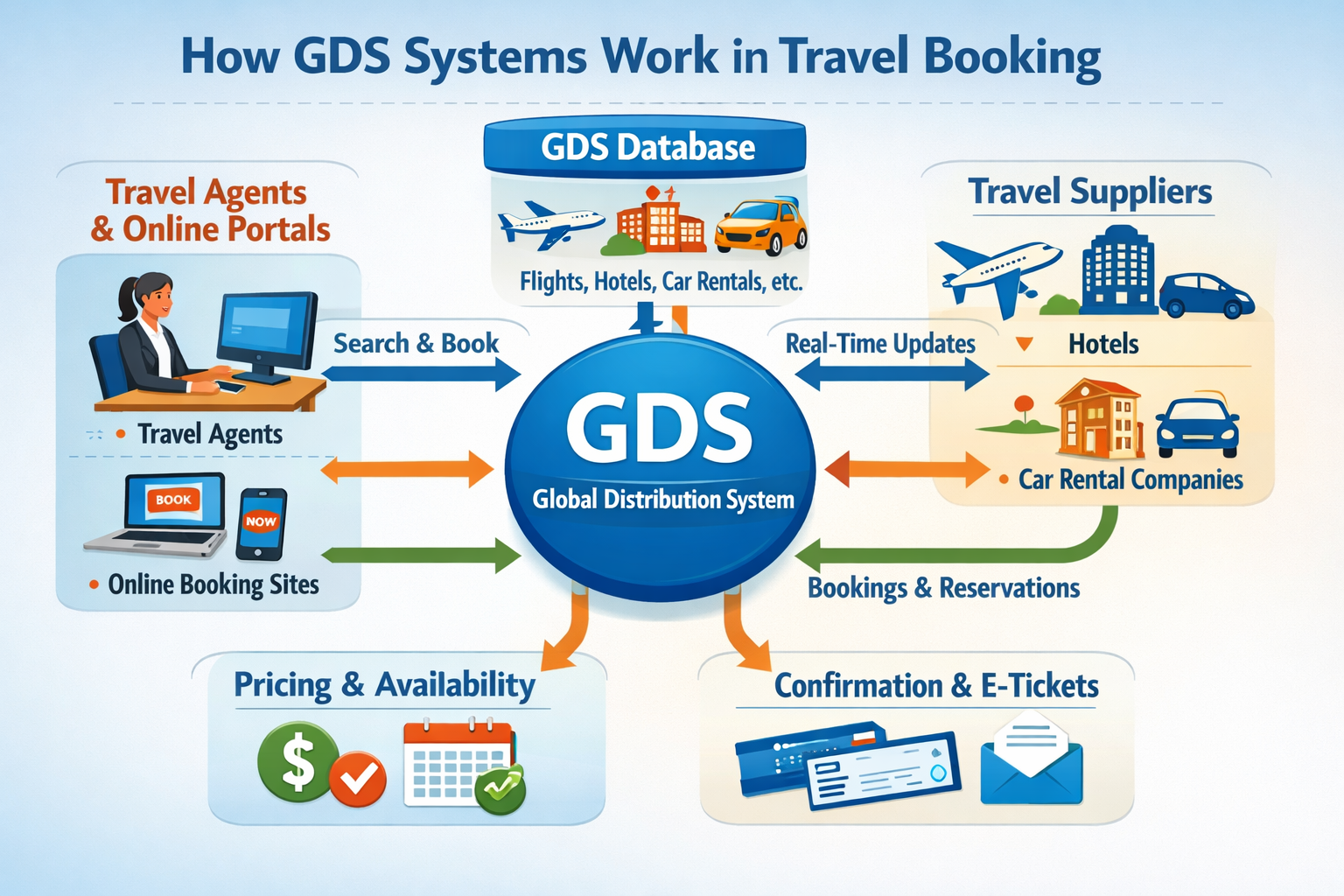
Many travel organizations combine booking platforms with airline APIs and global distribution technologies to expand service offerings. Understanding how travel APIs function within booking environments can provide useful context for system planning. For example, platforms discussed in the Duffel vs Amadeus API comparison demonstrate how airline data connectivity enhances booking workflows, while broader distribution technologies explored in the Amadeus vs Sabre vs Galileo comparison highlight the importance of multi-channel inventory access.
Typical integrations supported in modern travel platforms include:
Payment gateway systems
External travel APIs
Supplier management tools
Customer management systems (CRM)
Integration readiness plays a major role in determining whether a platform can support long-term business expansion without requiring significant system restructuring.
Performance Comparison for Cruise and Tour Bookings
Beyond feature availability, the real value of a booking platform becomes clear when evaluating how it performs under operational pressure. Travel businesses rely on systems that can process reservations quickly, maintain accurate pricing, and manage large volumes of bookings without disruption. Performance reliability directly affects customer satisfaction and operational efficiency, particularly during peak travel periods.
While both SHiPP and Trisept Solutions are designed to support large-scale booking environments, their performance strengths often reflect their primary use cases.
Systems optimized for cruise-heavy workflows may prioritize reservation speed and cabin allocation accuracy, whereas platforms built for broader travel packaging may focus on managing multiple service components simultaneously.
Inventory Management Efficiency
Inventory management forms the backbone of any cruise or tour booking operation. Maintaining accurate availability across cabins, tours, and package components ensures that reservations are processed without conflicts or delays.
SHiPP typically emphasizes structured inventory workflows that simplify cabin allocation and sailing availability tracking. By focusing on cruise-centric inventory logic, the platform often enables faster allocation processes and reduces the risk of overbooking scenarios. This structured approach is particularly valuable for organizations that manage frequent cruise departures with large passenger volumes.
Trisept Solutions, on the other hand, is generally designed to manage more diverse inventory environments. Instead of focusing exclusively on cruise inventory, the platform supports multiple travel components, including tours, accommodations, and activity-based services. This multi-product inventory structure offers flexibility but may require more detailed configuration during implementation.
Efficient inventory management usually depends on:
Real-time availability synchronization
Centralized inventory visibility
Supplier coordination workflows
Error prevention mechanisms
Organizations that operate across multiple travel categories often prioritize systems capable of balancing flexibility with reliability.
Real-Time Pricing Accuracy
Pricing accuracy is essential in maintaining customer trust and preventing operational losses. Travel bookings frequently involve fluctuating fares, seasonal adjustments, and promotional offers, all of which must be reflected accurately during the booking process.
SHiPP often supports pricing logic tailored to cruise reservations, where cabin pricing tiers, seasonal schedules, and occupancy levels play a significant role. This focused pricing structure can improve consistency when managing standardized cruise fare models.
Trisept Solutions generally provides broader pricing capabilities designed to handle dynamic travel packages. Because tour pricing may involve multiple components—such as accommodations, transportation, and activities—the system often supports more flexible pricing configurations. This adaptability allows businesses to create bundled offerings without compromising pricing accuracy.
Accurate pricing performance typically relies on:
Real-time fare updates
Automated pricing validation
Promotional rule management
Currency and tax handling
When pricing workflows are reliable, travel businesses can reduce booking disputes and improve customer confidence.
Booking Speed and System Stability
Booking speed and system stability play a critical role in maintaining consistent operations, especially during high-demand travel seasons. Delays in processing reservations can lead to customer dissatisfaction and lost revenue opportunities.
SHiPP environments are often designed to prioritize efficient cruise reservation handling, enabling agents to complete bookings quickly with minimal workflow interruption. Faster processing times can be particularly beneficial for call-center-based reservation teams that manage high booking volumes within short timeframes.
Trisept Solutions typically focuses on maintaining stability across multi-component bookings. Because packaged travel products may involve several interconnected services, the platform often includes mechanisms that ensure booking dependencies are processed accurately. This stability helps prevent inconsistencies between different travel components.
Performance stability is generally influenced by:
System response time
Server reliability
Load-handling capability
Workflow synchronization accuracy
Organizations selecting a booking platform should consider how system performance aligns with their operational volume and service complexity. Reliable performance not only improves internal productivity but also enhances the overall customer booking experience.
Pricing and Cost Considerations
Pricing plays a crucial role in the evaluation of travel booking platforms, especially for organizations planning long-term technology investments. Beyond the initial purchase decision, businesses must consider implementation complexity, customization requirements, and ongoing operational expenses. A platform that appears cost-effective at first may require additional investment over time, depending on integration depth and scalability requirements.
Both SHiPP and Trisept Solutions typically operate under structured commercial agreements, but their cost implications can vary based on organizational size and system configuration. Understanding how pricing models are structured helps businesses assess the total cost of ownership rather than focusing solely on initial licensing fees.
Licensing Models
Licensing models determine how businesses access platform features and services. Travel technology providers often structure licensing based on usage volume, feature access, or enterprise agreements tailored to operational requirements.
SHiPP environments are often associated with structured licensing arrangements that align with cruise-focused operations. Businesses with predictable booking volumes may benefit from licensing models that scale based on reservation activity rather than broad enterprise features.
Trisept Solutions typically follows customized licensing structures designed to support broader travel operations. Because the platform often handles multi-service travel environments, licensing arrangements may reflect the number of integrations, service components, and workflow requirements included in the system.
When reviewing licensing agreements, organizations usually evaluate:
Feature access included within the license
Scalability of licensing tiers
Restrictions on integrations or modules
Upgrade flexibility as business needs evolve
Careful review of licensing conditions ensures that businesses select solutions capable of adapting to future operational growth.
Implementation Costs
Implementation represents one of the most significant financial considerations when adopting a new booking platform. The process often includes system configuration, data migration, workflow customization, and user training. The complexity of these tasks directly influences the total implementation timeline and associated costs.
SHiPP implementations are generally aligned with structured cruise workflows, which may allow faster deployment timelines in environments that primarily handle cruise bookings. When operational processes are standardized, implementation efforts can be streamlined, reducing the need for extensive customization.
Trisept Solutions implementations may involve additional planning due to the broader range of travel services supported. Businesses managing complex tour packaging or multi-service travel environments often require deeper system configuration, which can extend implementation schedules but provide long-term flexibility.
Implementation costs are often influenced by:
Data migration requirements
Workflow customization needs
Integration with external systems
Staff training and onboarding
Organizations planning large-scale deployments typically conduct phased implementation strategies to minimize operational disruption.
Long-Term Operational Costs
Long-term operational expenses determine the sustainability of a booking platform investment. These costs extend beyond implementation and include maintenance, updates, system support, and infrastructure management. Businesses that fail to account for ongoing expenses may encounter unexpected financial challenges after deployment.
SHiPP operational environments are often associated with predictable maintenance cycles, particularly in cruise-focused workflows where system processes remain relatively standardized. This consistency may simplify long-term budgeting for businesses with stable service structures.
Trisept Solutions environments may involve more dynamic operational expenses due to the broader range of services supported. Businesses operating multi-component travel products may require continuous system adjustments, supplier updates, and performance monitoring to maintain operational accuracy.
Typical long-term operational cost factors include:
Platform maintenance and technical support
System upgrades and feature enhancements
Integration, maintenance, and monitoring
Infrastructure and hosting requirements
Evaluating long-term costs helps businesses avoid short-term decision-making and instead focus on sustainable technology investment strategies.
Scalability and Business Suitability
Scalability determines whether a booking platform can support business growth without requiring frequent system replacements or major restructuring. Travel companies often begin with limited service offerings but gradually expand into new markets, introduce additional products, or increase booking volumes. Selecting a system that can grow alongside operational demands helps reduce long-term risks and ensures continuity in service delivery.
Both SHiPP and Trisept Solutions are designed to support expanding travel businesses, but their scalability strengths typically align with different operational models. Some businesses require depth in a single service category, while others need flexibility to support multiple travel products within a unified workflow.
Best Fit for Small Agencies
Small travel agencies often prioritize simplicity, cost control, and quick implementation when selecting booking technology. Limited technical resources mean that systems must be easy to configure and maintain without requiring extensive customization.
SHiPP environments are often suitable for smaller organizations focused primarily on cruise bookings. Its structured workflow approach can reduce operational complexity and help staff adapt quickly to digital booking systems. For agencies handling consistent cruise reservations rather than diverse travel products, streamlined workflows can improve efficiency without introducing unnecessary features.
Trisept Solutions may also support smaller agencies, particularly those planning to expand into multi-service offerings over time. However, businesses with minimal service diversity may initially find broader platforms more complex than necessary.
Small agencies typically evaluate:
Ease of setup and onboarding
Minimal training requirements
Affordable operational structure
Ability to manage moderate booking volumes
Choosing the right platform at an early stage can significantly influence long-term operational stability.
Best Fit for Mid-Sized Travel Companies
Mid-sized travel companies operate with higher booking volumes and more diverse service offerings than small agencies. At this stage, workflow flexibility and system reliability become increasingly important. Businesses may introduce packaged tours, seasonal promotions, or bundled services that require coordinated inventory management.
SHiPP can support mid-sized businesses that maintain a strong focus on cruise services while gradually expanding operational scale. Its structured booking processes help maintain consistency as booking volumes increase, reducing the risk of workflow disruption during growth phases.
Trisept Solutions often aligns well with mid-sized organizations that manage multiple travel services simultaneously. The ability to coordinate various travel components within a unified platform allows businesses to diversify offerings without introducing separate systems for each service type.
Key mid-sized business priorities often include:
Reliable performance during peak booking periods
Flexibility to introduce new travel packages
Integration with supplier networks
Centralized control over expanding operations
Platforms that support both growth and operational control provide long-term value for businesses transitioning into larger-scale operations.
Enterprise-Level Suitability
Enterprise travel organizations operate across multiple markets and manage large volumes of bookings daily. Their technology requirements often extend beyond reservation handling to include global supplier coordination, advanced reporting systems, and large-scale infrastructure support.
Trisept Solutions is commonly positioned to support enterprise-level environments that require extensive workflow customization and large-scale system coordination. Businesses managing global travel operations often benefit from platforms capable of handling multiple travel services within a unified ecosystem.
SHiPP may also support enterprise operations, particularly for organizations heavily focused on cruise bookings. In cases where cruise services represent the primary business model, specialized systems can deliver consistent performance without introducing unnecessary operational layers.
Enterprise-level evaluation typically focuses on:
Ability to handle high transaction volumes
System reliability across multiple locations
Support for complex workflow structures
Long-term scalability across regional markets
Selecting an enterprise-ready platform requires careful assessment of both current operational needs and projected future expansion.
Advantages and Limitations of Each Platform
Every booking platform offers strengths suited to certain operational models while also presenting limitations that may affect specific business environments. Understanding both sides helps organizations avoid mismatched technology decisions and ensures that platform capabilities align with operational priorities.
Rather than assuming one platform fits all use cases, decision-makers often evaluate how each system performs within their own workflow requirements, service offerings, and long-term expansion plans.
SHiPP Advantages and Limitations
SHiPP is generally valued for its structured cruise-focused workflow design, making it suitable for businesses that depend heavily on cruise reservations. Its operational simplicity often helps teams maintain consistency across daily booking activities without requiring complex configurations.
Advantages of SHiPP may include:
Streamlined cruise reservation workflows
Simplified cabin and sailing management
Faster onboarding for cruise-focused teams
Reduced operational complexity for single-service environments
Despite these strengths, certain limitations may arise when businesses expand into broader travel offerings. Platforms designed primarily for cruise operations may not always support complex multi-service travel workflows without additional configuration.
Potential limitations include:
Limited flexibility for advanced tour packaging
Fewer built-in tools for multi-product travel environments
Possible need for external integrations to support broader services
Organizations focused mainly on cruise operations often find value in specialized systems that prioritize accuracy and speed over multi-service flexibility.
Trisept Solutions Advantages and Limitations
Trisept Solutions is commonly recognized for its flexibility in managing diverse travel services within a unified environment. Businesses that offer packaged tours or bundled travel products often benefit from platforms capable of coordinating multiple service components simultaneously.
Advantages of Trisept Solutions may include:
Strong support for multi-service travel workflows
Flexible packaging and itinerary management
Scalable infrastructure for expanding travel businesses
Capability to manage complex booking dependencies
However, flexibility can also introduce complexity. Platforms designed to support multiple travel components may require longer setup periods and more detailed configuration, especially for businesses with simpler service structures.
Potential limitations include:
Longer implementation timelines
Increased configuration requirements
More complex user workflows for smaller teams
For organizations managing diverse travel products, flexibility often outweighs implementation complexity, making scalable platforms a practical long-term investment.
SHiPP vs Trisept Solutions: Side-by-Side Comparison Table
After reviewing features, performance, scalability, and pricing considerations, a summarized comparison can help decision-makers quickly evaluate which platform aligns better with their operational goals. While detailed explanations provide depth, comparison tables simplify complex differences into an easy-to-understand format.
The following overview highlights key areas where SHiPP and Trisept Solutions differ, helping businesses identify which system fits their workflow, service scope, and long-term strategy.

This summarized comparison supports quick decision-making, especially for stakeholders reviewing multiple technology solutions within limited evaluation timeframes.
Which Platform Should You Choose?
Choosing between SHiPP and Trisept Solutions ultimately depends on how your travel business operates and what services you plan to scale in the future. While both platforms support cruise and tour booking workflows, their strengths become more noticeable when aligned with specific business models.
Instead of focusing only on features, decision-makers often evaluate how well a platform supports their daily operations, growth plans, and customer experience expectations. Businesses that select technology based on operational fit rather than popularity typically achieve more stable long-term results.
Choose SHiPP If
SHiPP is often a strong choice for organizations that prioritize cruise-focused operations and require structured workflows that simplify booking management. Businesses that handle consistent cruise volumes benefit from systems that reduce unnecessary complexity while maintaining accuracy in reservation handling.
You may consider choosing SHiPP if your business:
Primarily manages cruise reservations or cruise-heavy packages
Requires streamlined workflows for faster processing
Prefers structured booking environments with fewer customization layers
Operates with teams that benefit from simplified system navigation
Companies with specialized cruise services often achieve better operational efficiency when using platforms designed specifically for their core offerings.
Choose Trisept Solutions If
Trisept Solutions is generally suitable for travel organizations that manage diverse services and require flexible systems capable of handling complex travel combinations. Businesses offering bundled travel experiences often benefit from platforms that support integrated itinerary management.
You may consider choosing Trisept Solutions if your business:
Offers bundled tours, vacation packages, or multi-service travel products
Requires flexible packaging tools for customized itineraries
Plans to expand into diversified travel services
Needs advanced coordination between multiple booking components
Organizations focused on growth through diversified travel offerings often find value in platforms designed to manage complexity efficiently.
How Professional Travel Technology Development Supports Successful Booking Systems
Selecting the right cruise or tour booking platform is only one part of building a successful digital travel infrastructure. Many businesses face operational challenges not because of platform limitations, but due to improper implementation, lack of customization, or limited integration capabilities.
Modern travel companies increasingly rely on specialized development support to configure booking systems according to their workflows. From integrating APIs to designing scalable user experiences, expert implementation ensures that booking platforms perform efficiently under real-world conditions.
Businesses planning to modernize their booking environments often benefit from working with experienced technology partners that understand the complexities of travel systems. Professional travel development services help organizations build reliable booking platforms that support real-time availability, secure transactions, and seamless user journeys.
Development support typically includes:
Cruise and tour booking system integration
Custom workflow configuration
API-first travel platform development
Mobile and web booking application design
System scalability and performance optimization
Companies such as Guru Technolabs provide tailored travel technology solutions that support businesses in building scalable booking environments. Organizations seeking to enhance their digital booking capabilities can explore professional travel app development services to ensure long-term operational success.
Final Verdict
Selecting between SHiPP and Trisept Solutions is not simply a technical decision—it is a strategic step that can shape how efficiently your cruise and tour bookings operate in the long run. Both platforms offer valuable capabilities, but their true effectiveness depends on how closely their strengths align with your service model, operational scale, and future expansion goals.
Businesses focused heavily on cruise reservations often benefit from streamlined systems designed for consistency and speed, while organizations managing diversified travel products typically require flexible platforms capable of handling complex travel workflows. Understanding your operational priorities before committing to a booking platform helps reduce implementation risks and ensures smoother day-to-day performance.
As travel technology continues to evolve, companies investing in scalable and adaptable systems position themselves to respond more effectively to changing market demands. Whether you prioritize specialization or flexibility, choosing the right platform today lays the foundation for reliable growth and improved customer experiences in the years ahead.







Write a comment ...